Over the past four years, Estonia has developed a national alert system, EE-ALARM, which sends rapid and immediate alerts to the population in the event of an emergency. The notification system is constantly evolving to keep pace with changing circumstances and opportunities. Regular tests are carried out to ensure that the system is working properly and that any potential bottlenecks are identified in a timely manner.
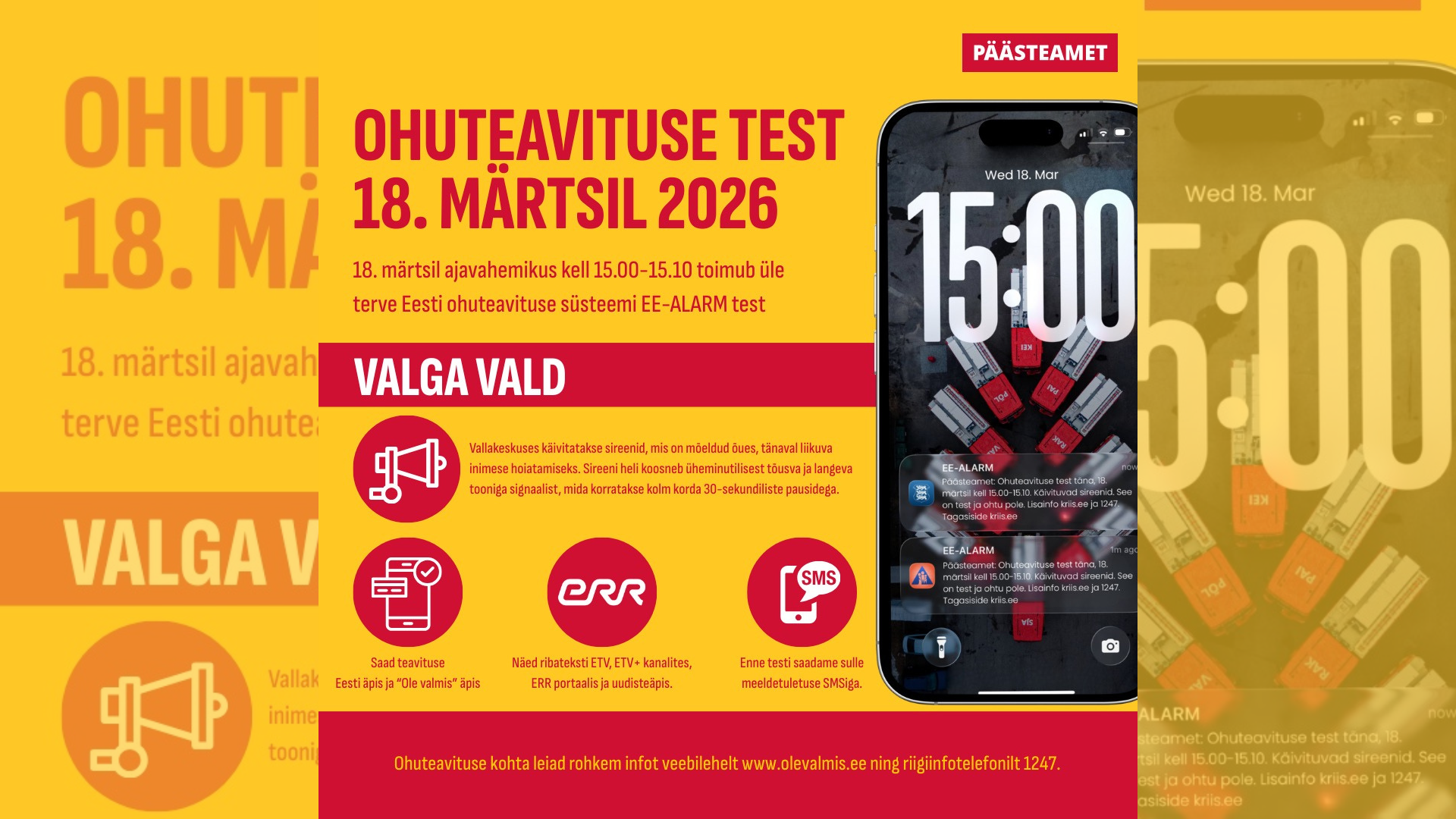
The next test of the hazard warning system will take place on 18 March 2026. While on the one hand it is a test of the system's reliability, on the other it is a great opportunity for the public to think about how to act in real life in an emergency. It is the people, the recipients of the information, who are the most important link in the whole information system, and therefore informed behaviour is invaluable.
What to do if you receive an alert?
The alert can reach people through several different channels: an SMS alert, an alert on the Estonia app or a „Be prepared!“ alert. app, as a bar text on different ERR channels (ETV, ETV+, news portal and app) and in larger settlements and their surroundings also via the siren network.
In the next few years, the hazard warning system will also include a lightning warning or cell broadcasti technology that allows you to send a message using sound, vibration and light, regardless of whether these settings are on or off in your phone. As mentioned, the notification system is constantly evolving to enable the best possible notification of the threat.
The safety information message is always short and clear - it tells you what has happened and what to do in case of an emergency. These instructions will help you to cope with an emergency as painlessly as possible. That is why it is always important to read the message carefully. If the information contained in the message does not seem to be enough, you can get more information in case of a crisis by visiting the websites kriis.ee and olevalmis.ee or by calling the national helpline 1247. It is worth remembering that only official sources of information should be trusted. This will help to avoid falling into the trap of malicious misinformation.
A siren always means one thing and one thing only: take shelter in the nearest room!
In an emergency, literally every second counts, so it is important that people know how to act in the event of a threat. While other warning channels can tell you what the threat is and how to proceed, the siren does not.
When the state triggers the sirens, it absolutely always means the need to take shelter immediately in the nearest indoor area. It is worth remembering that the best place to hide is usually where you are. If you are in a building, stay there. For explosion hazards, move to lower floors, to a room without windows and with reinforced walls, preferably a basement. Be sure to stay away from windows. Remember that any barrier between you and the threat could save you from serious injury or death.
Research from the Rescue Board shows that in a situation where a person is at home and can take shelter with a hazard warning order, 68% of people will seek a safer place in their home without leaving it. This is also the right behaviour. However, almost a fifth of people would choose to leave their home, putting their lives at risk.
These figures show that a large part of the population is relatively well informed about the rules of behaviour in the event of an emergency, but a significant number of people still need to be reached with these guidelines. The nationwide alert test is a good opportunity to do this, and also gives everyone a reason to think about their personal emergency plan. Crises are not to be feared, but crises must be prepared for. It is a way of building up the confidence that, if the threat should really hit, we know how to act to protect ourselves and our loved ones from the worst. Knowledge and skills are part of our confidence.
In addition to the March test, the nationwide alert will also be tested on 10 June and 14 October this year.
Diana Samalea, Hazard Warning Adviser Project Manager, Rescue Board