
Alien species are species that occur outside their natural range. They have been introduced by human activities, whether intentional or unintentional.
Invasive alien species
Threatens other species, alters habitats and the natural balance. Causes damage to the economy and the environment through rapid spread. Lists of invasive alien species, the keeping and cultivation of which is prohibited, have been approved separately by Estonia and the European Union. See lists of prohibited species.
Problem type
A natural species of Estonia whose increase in abundance, like that of non-native species, may affect other natural species and pose a threat to human health and property. This can be caused by human activities as well as natural changes and fluctuations in abundance.
Spanish tea snail
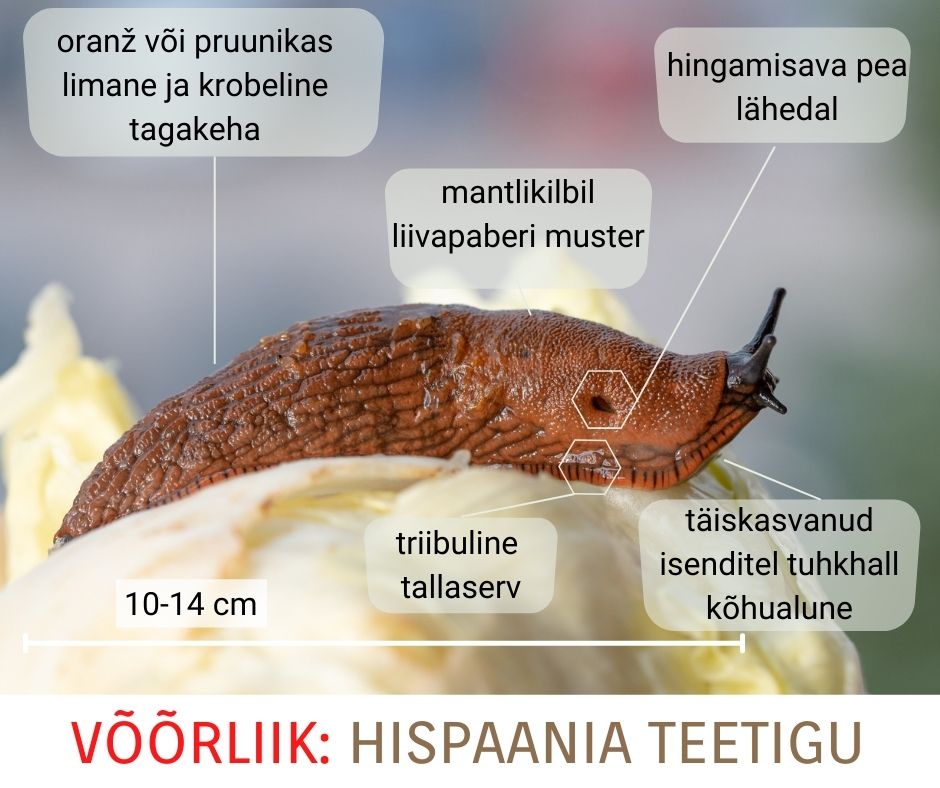
Spanish tea snail (Arion vulgaris) originated in Portugal and has spread throughout Europe with the help of humans. The species was first recorded in Estonia in 2008. Its rapid spread has been fuelled by changes in farming practices, the ban on burning of straw and straw crops, the decline of natural population limiters and a surge in international trade in plants and vegetables.
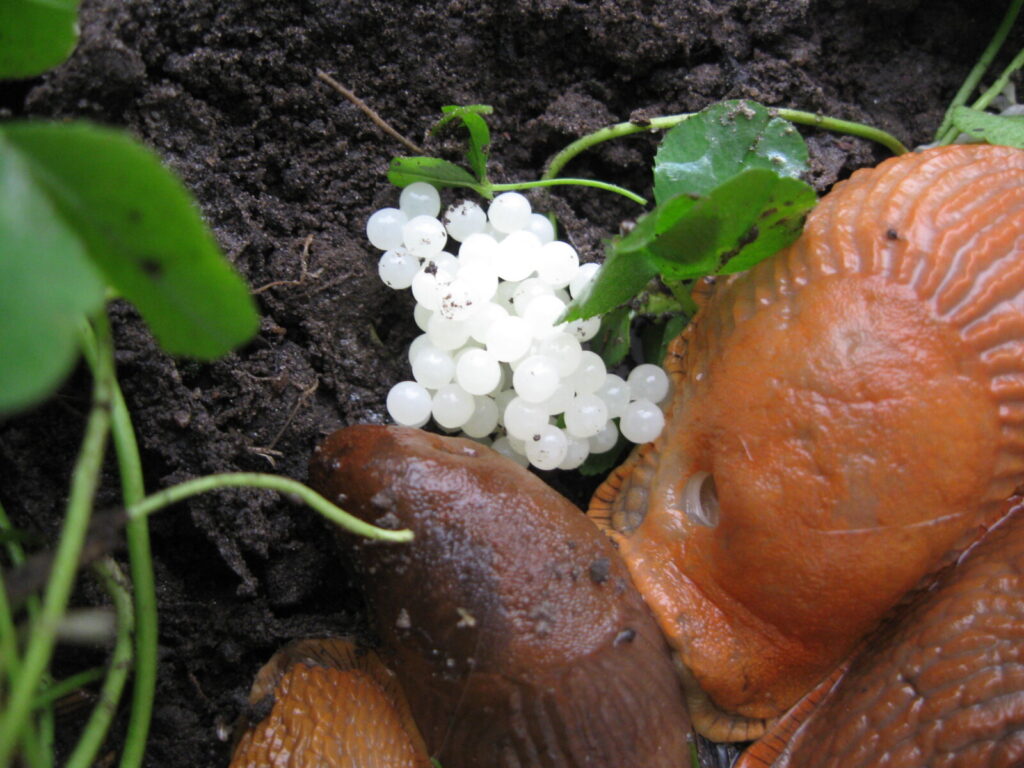
Spanish tea-tree eggs are very similar to fertiliser granules, which makes it difficult to quickly identify them in the soil balls of the seedlings. However, the eggs are slightly more transparent and usually cluster together.
Predominantly herbivorous, the Spanish snail feeds on succulent vegetables (e.g. cucumber, pumpkins, lettuce), ornamentals, cereal crops and mushrooms. In addition, decaying parts of plants, fermenting fruits, and sometimes dead conspecifics in high densities are suitable.
Typical habitats include low-maintenance and rarely mowed gardens, grasslands, parks and moist broad-leaved woodland, including greenhouses. They are mostly crepuscular and nocturnal migrants, with daytime movements during rainy periods. In warm winters and with good shelter they overwinter successfully.
Tunnels
The Spanish snail is a remarkably large starver - the adult animal is 7-15 cm long when stretched out.
He has no home.
Body colour can vary widely from dark brown to reddish, orange, yellowish and beige tones. Young animals often have a slightly darker longitudinal stripe on each side of the body than the background colour. The mucus covering the body is orange-yellow.
The bright colouring of the lamb's foot is characteristic, with darker waves (stripes) clearly visible. The colour of the head is usually darker than that of the body.
The breathing hole is located at the front of the cloak.
The white eggs, about 3 mm in diameter, are laid in batches of 20 to 30 (40) in a compost heap in a shady, moist place. The eggs hatch after 3.5-5 weeks and reach sexual maturity (able to lay eggs) after 6 weeks. A single specimen can lay up to 400 eggs.
Prevention and control
What can I do to avoid Spanish tea worms in my garden?
if the distribution of Spanish snails is known in the area, so-called "tea fences" - smooth tin fences that are difficult for snails to climb up - can help. However, the climbing ability of Spanish snails is quite good;
don't bring into your garden flowers and shrubs from areas where starving alien species live;
if you buy seedlings and suspect that there may be Spanish tea tree eggs, quarantine the seedling for 5 weeks: tie a bubble wrap around a plastic bag, securing it tightly around the stem of the seedling, and check occasionally for egg hatchlings inside the bag. Keep the plant in a suitable place (light, temperature) and water;
you can check the soil balls of the plants you have bought and destroy any (possible) eggs found.
What to do if you have Spanish tea leaves or blackspot in your garden?
constantly pick up starving adults, as each individual can lay a very large number of eggs;
Either smash the starving fish you find in half with a spatula or pick them up in a container and pour boiling water over them. You can bury the drowned specimens under a shovel deep in the soil, where the conditions are certainly not suitable for egg development and the starvers will not be able to crawl out;
almost eaten-up watermelon rinds and beer straws are also a good way to gather the hungry, making them easier to collect;
be sure to communicate with your neighbours to get them to pick up the hungry ones in their gardens, otherwise it will be impossible to get rid of them;
be sure not to take live hungry plants elsewhere (forest edge, meadow, park) as you will spread them and sooner or later they will spread back to your garden;
garden waste (e.g. leaves, stalks and leaves, old mulch) must not be taken to the edge of woods, meadows, parks, thickets or waste ground, as this may be accompanied by starving animals or their eggs. They can live and breed undisturbed in such places, as no one is there to pick them. In addition, they will sooner or later spread from there into gardens. Garden waste should be composted in your own garden, or you can use your local authority's garden waste facilities, including bio-waste bins;
take care of your garden - keep the lawn low, the soil tilled. Constantly check for possible hiding places for hungry plants and eggs (bases of larger flower bushes and shrubs, terrace bases, any marginal areas), keep them tidy (dig around, mow). Be sure to dispose of the eggs (pour boiling water over them);
if possible, encourage natural enemies of non-native hungry animals in the garden, which eat hungry eggs as well as crawling specimens - native hungry species, larger beetles, birds, hedgehogs;
Among poultry, a number of duck breeds, such as the Peking duck, the Indian runner duck, and the Muscovy duck, feed on starving birds;
Theo-toxins are not very effective at repelling invasive species, and when used they destroy beneficial native species. In addition, you poison the birds and animals that feed on them (e.g. hedgehogs) and the poison can also reach domestic animals (cats and dogs).
Be sure to destroy the alien species. Learn the identification marks and keep native species!
The Environment Board is collecting information on the spread of alien invasive species in Estonia!
Please be sure that it is a foreign species - look at the identification marks and if possible attach a photo.
Everyone can mark on the map a point where they have seen them, whether it's their own garden, a neighbour's garden, the edge of a cycle path, a garden or a lake.
All sites all over Estonia are welcome. Please be sure that it is a Spanish tea plant or a black tea plant. Look at the identification marks and, if possible, attach a photo.
Black Pepper
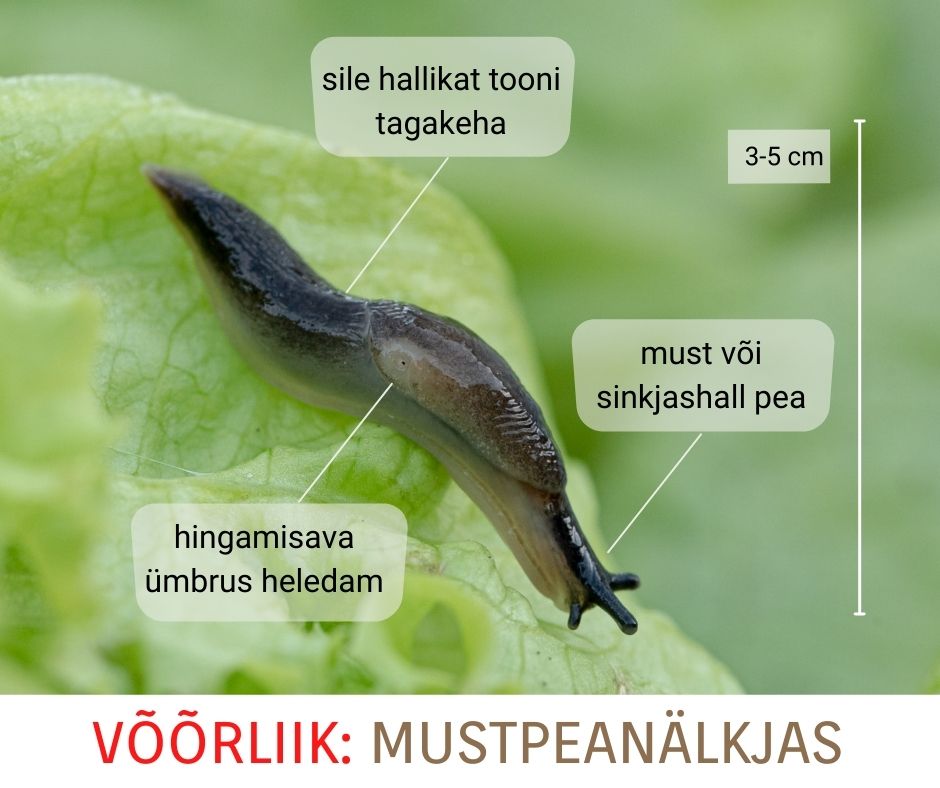
Black Pea (Krynickillus melanocephalus) has a natural range in the Caucasus region, Crimea, north-east Turkey and northern Iran. The first records of the species in Estonia were made in 2013.
Blackleg is mainly spread by humans through the trade in ornamental plants, transport of soil, flower pots, pellets, used plant substrate and garden waste.
Black-faced dormice are vegetarian and prefer juicy vegetables (pumpkin, courgette, lettuce, cabbage). Hostas, horseradish, rhubarb, fallen apples and raspberries have also been observed feeding.
In the wild, the black-necked woodpecker occurs in damp places under rocks, flatwoods and ground-covering vegetation in coppice forests and river banks. In settlements, they prefer gardens (compost heaps) and the surrounding waste ground, parks and cemeteries.
Tunnels
Adult black-faced starvers are small to medium-sized, 4.5-5.5 (6.2) cm when fully extended (3.5).
He has no home.
Body colour pale, white-grey, the edge of the respiratory opening is paler than the base colour.
The head and antennae are deep black to zinc-black in the upper view.
The posterior side of the carapace is pale greyish yellow to greyish white in most specimens, and is distinguished from the darker anterior and posterior parts.
Lima colourless, watery.
Invasive species of bear
Coal-bear's beard, Sosnovsky's beard and Persian beard are dangerous invasive alien species. They are a threat to our natural communities because of their rapid spread and large growth. It is the responsibility and duty of every landowner to eradicate and prevent the spread of these invasive species.
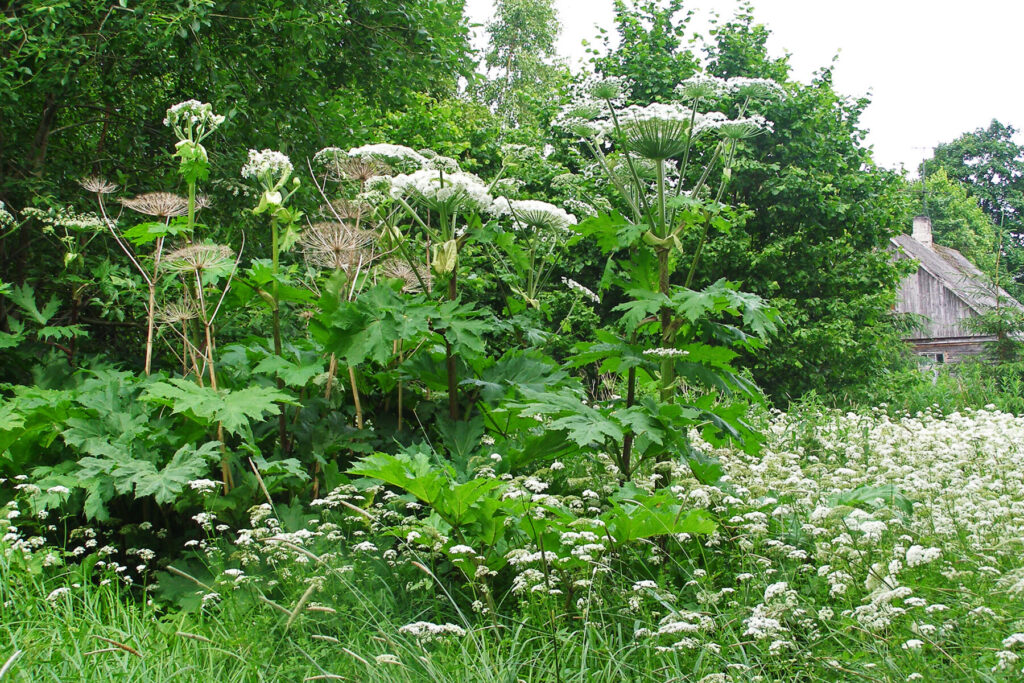
Photo by Eike Tammekänd
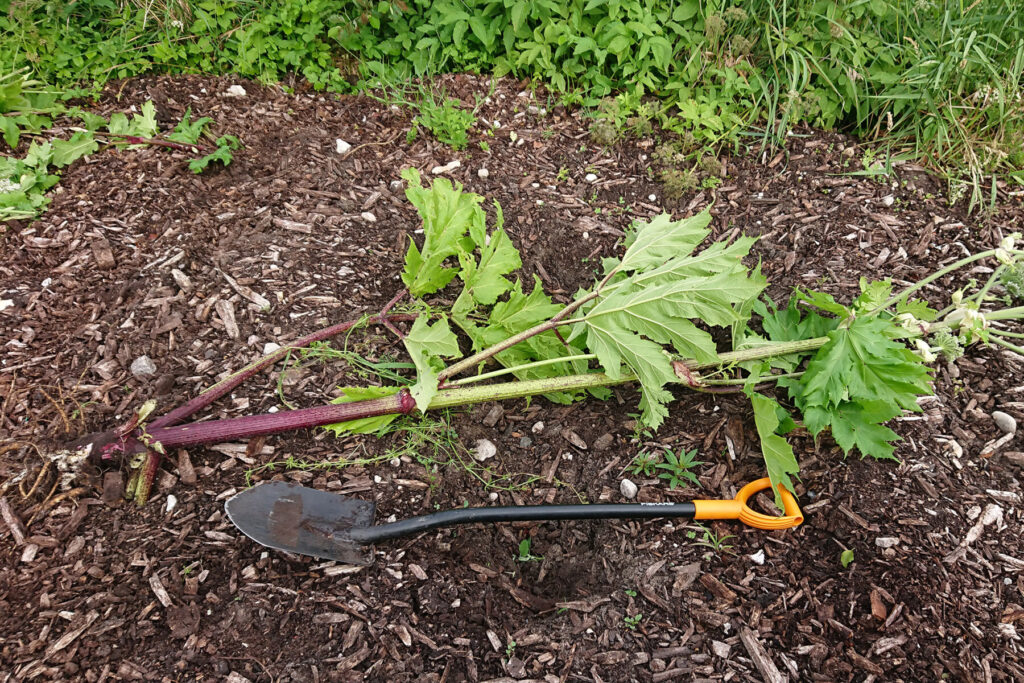
Photo by Eike Tammekänd
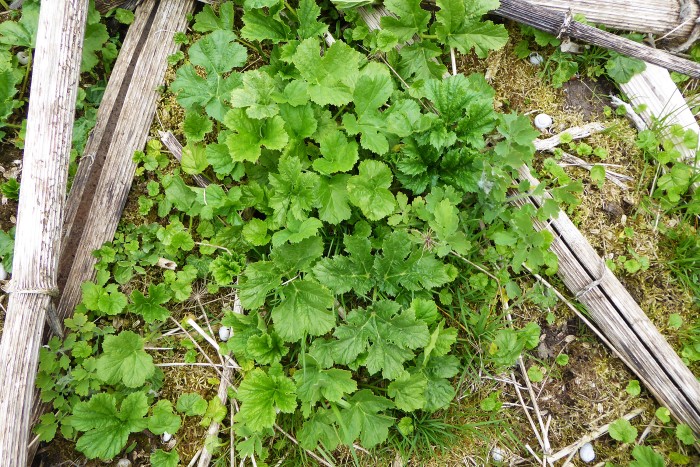
Photo by Eike Tammekänd
Both in Europe and elsewhere in the world, the problematic European and Sosnovsky's and Persian bearsbane must be eradicated and must not be grown or spread.
The invasive species of the bear weevil are a threat to human health.
Exposure to the juice and sunlight can cause redness, burning blisters, even ulcers on the skin; eye contact can cause blindness.
It's worth knowing that native Siberian bearberry grows in Estonia (Heracleum sibiricum), which is safe for humans. In addition, there is another non-native species, the Lehmann's bearclaw (Heracleum lehmannianum), but this species is not invasive.
The control of the invasive species of beargrass is a demanding task, because when the seeds ripen and fall into the soil, the work of previous years is lost and the time to detach from the plants is significantly prolonged.
Bearberry seeds are known to remain germinable in soil for more than 10 years. It is therefore particularly important to destroy the plants in time and to avoid flowering and post-flowering fruiting.
How can you get rid of bear pupae yourself?
Approached wisely and defensively, control is not dangerous and requires timing, a little physical effort, patience and consistency.
In the case of a small colony and individual plants, it makes most sense to dig up the plants early in the growing season, in May, when the plants are still small and the soil is likely to be moist. Digging should be repeated as necessary during the summer, as new plants may emerge from the seed bank.
A handbook for the landowner to identify and control invasive species of bear: READ THE MANUALS
Control should be carried out until no more plants sprout. Even then, keep an eye on the site for several years;
Start in spring when the plant is about 20 cm tall;
The safest way is to dig out the main root, which extends to a depth of about a shovel. Leave the root to dry;
Protect your skin and eyes from contact with plant sap!
Burn the inflorescences with seeds or seed heads. Be careful not to spread the seeds through clothing and equipment;
Rapid eradication of individual plants avoids years of painstaking control;
It takes time to weaken a large colony - a significant reduction in the number of beargrass plants can be seen after about five years of consistent control.
Where to report a sighting of a bear cub?
The Environment Agency is waiting for information on new occurrences of the invasive species bear. When submitting a report, please send a photo if possible to confirm the species.
Whereabouts notices may be entered nature observation smart app or an app PlutoF Go. If you are unable to use the app, you can send your observations or questions about the bear trap to. .
The locations of known colonies can be seen on the Geoportal of the Earth and Space Administration's bear trap map application.
Information on the subpage "Alien species" From the Environment Agency website