
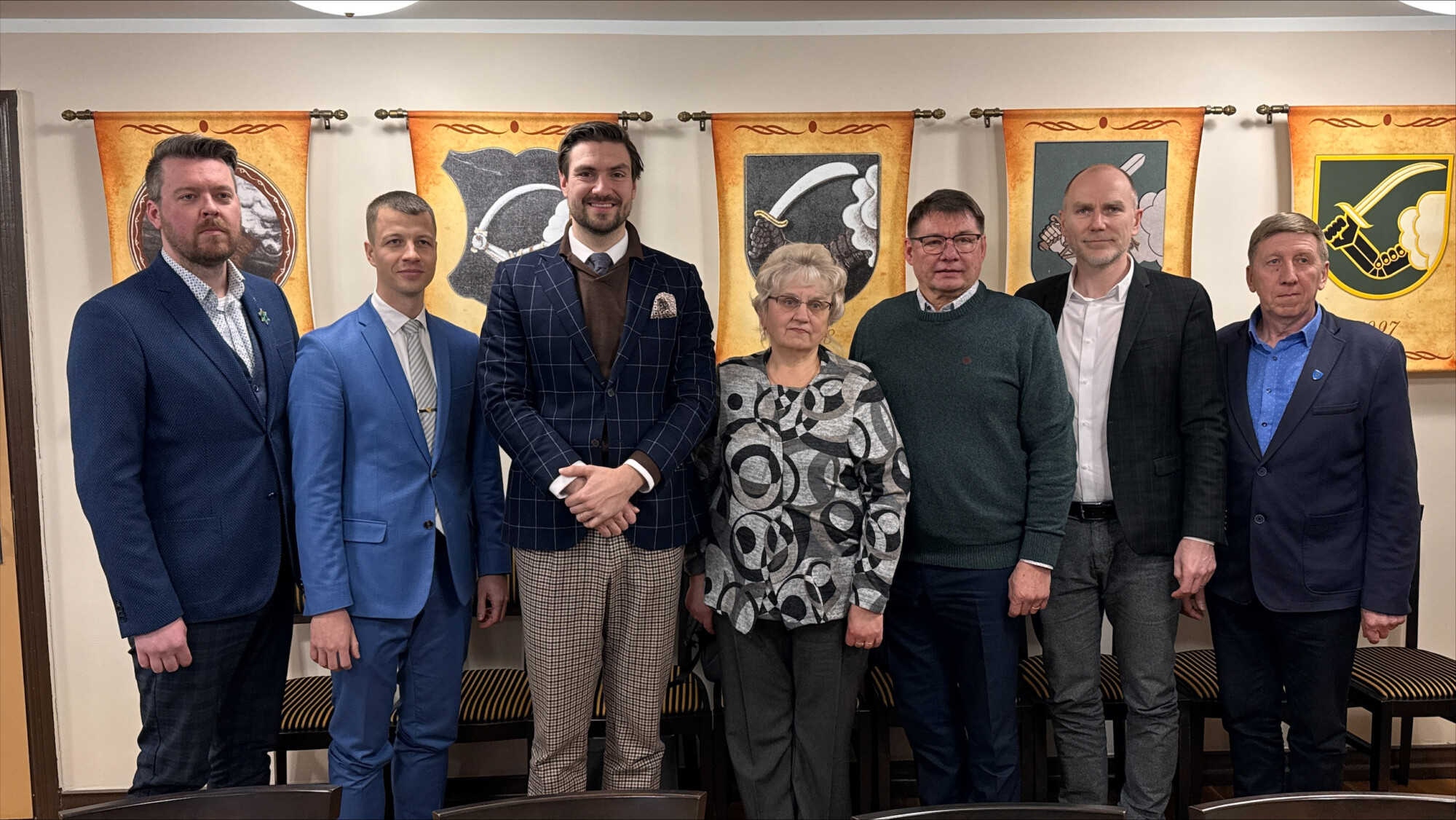
On Friday, 13 February 2026, a meeting was held in Valga between the Minister of Regional Affairs and Agriculture Hendrik Johannes Terras, representatives of AS Eesti Liinirong (Elron), Valgamaa Joint Transport Centre and the municipalities of Valga County.
The meeting was prompted by a joint appeal of the Otepää, Tõrva and Valga municipalities regarding the changes to the timetable of the Valga-Tartu train line that came into force on 5 January.
The leaders of the municipalities of Otepää, Tõrva and Valga drew attention to the fact that according to the new timetable, residents of the region will no longer be able to get to work, school or kindergarten in Tartu before the start of the working day. While the previous connection allowed arriving before 9 a.m., the train now arrives in Tartu only at 11.25 a.m. At the same time, there is no functioning bus service that would offer a suitable alternative.
At the meeting, the leaders of the local authorities of Valga County stressed that this is not a convenience service or a single line change, but a regional policy issue. Functioning public transport is a prerequisite for the viability of peripheral regions. The lack of morning services will exacerbate car dependency, increase costs for families, increase environmental pressures and make the area less attractive to live in.
Otepää Mayor Jorma Riivald pointed out that the new arrangement forces families to use a private car on a daily basis, increasing costs and risks, especially in winter road conditions. Kalle Vister, mayor of Tõrva and Tarmo Tamm, deputy mayor of Tõrva, pointed out that the situation was exacerbated by a change in the timetable of the GO Bus route 80, which makes it more difficult for teachers and professionals to travel to Viljandi and Tallinn. Mati Kikkas, chairman of the Valga Municipal Council, and Mart Kase, mayor of the municipality, stressed that a municipality of almost 15 000 inhabitants depends on a coordinated train and bus timetable, and that the weakening of public transport is accelerating peripheralisation.
As a result of the meeting, it was agreed to launch a pilot solution. From 1 March to 10 June 2026, the Valga-Tartu bus service will be put into operation, replacing the lost morning train service. During the trial period, the impact of the solution will be evaluated and feedback will be collected to inform future decisions. The timetable, stops and ticket prices for the new bus service will be specified in the coming days.
In addition, the future possibilities of the Valga-Tartu train line were discussed at the meeting. When AS Eesti Liinirongi will have the opportunity to introduce new Škoda trains, additional rolling stock will become available, which will be used to add two additional departures to the Valga-Tartu line. As a result, the number of trips on the line would increase to seven per day, significantly improving connectivity.
The leaders of the local authorities in Valga County said that the train service in South Estonia is not a luxury, but a vital public service. While national attention is being focused on international connections, the daily mobility of Estonian people within their own country must not be neglected.
The Ministry and the municipalities will continue to engage in an active dialogue to find a long term solution that will ensure that the people of the region have access to public transport that supports their working and educational lives.
The meeting was attended by the Mayor of Otepää Municipality Jorma Riivald, the Mayor of Tõrva Municipality Kalle Vister and Deputy Mayor Tarmo Tamm, the Chairman of Valga Municipal Council Mati Kikkas and the Mayor of the Municipality Mart Kase, and Minister Terras. Andres Ruubas, Head of the Public Transport Department of the Ministry, Lauri Betlem, Chairman of the Board of Elron and Kristi Unt, Head of Customer Experience, and Ivar Unt and Liia Rätsep, representatives of the Valgamaa Public Transport Centre, were also present.